
A $700 tree removal and a $3,000 tree removal can look surprisingly similar from the ground. The difference usually becomes clear when you look up. Tree height matters, but so do heavy limbs, nearby roofs, power lines, fences, slopes, and how easily a crew can reach the tree.
Christian Brothers removes trees throughout Kent, Muskegon, Ottawa, and Newaygo counties, including Grand Rapids, Grandville, Muskegon, Holland, Grand Haven, Newaygo, White Cloud, and surrounding West Michigan communities.
What Makes One Tree an $800 Job and Another a $3,000 Job?
Two trees can be the same height and still have very different removal costs.
A 40-foot tree standing alone on an open lawn gives a crew room to work. Put that same tree beside a garage, behind a fence, or above a patio, and the job changes. Instead of dropping larger sections, the crew may need to rope limbs down one at a time and work around structures, landscaping, or other obstacles.
That is why most tree companies price removal by the job rather than by height alone.
Some crews charge $100 to $300 per hour, but most provide an upfront price after seeing the tree, property, and access.
Tree Removal Cost by Tree Size
Tree size is still one of the biggest factors in your quote. Taller trees carry more wood, larger limbs, and more weight, which usually means more labor and equipment.
| Tree Size | Typical Height | Estimated Removal Cost |
|---|---|---|
| Small | Under 30 feet, including ornamentals and small pines | $300 to $800 |
| Medium | 30 to 60 feet, including many maples and ash | $800 to $1,500 |
| Large | Over 60 feet, including mature oaks and evergreens | $1,500 to $3,000+ |
These ranges cover taking the tree down. Stump grinding and debris hauling may add to the final price depending on what you want left behind.
Do You Need Removal, or Does the Tree Just Need a Trim?
Not every troublesome tree needs to disappear.
If the tree is healthy and you want to pull branches away from the roof, improve its shape, open a view, or thin crowded growth, trimming may solve the problem for less money. Our tree trimming cost guide breaks down those costs, and you can also learn more about our tree trimming and pruning service.
Removal makes more sense when a tree is dead, hollow, badly leaning, storm-damaged, lifting pavement, interfering with power lines, or crowding healthier trees.
Dead ash trees are a common sight throughout West Michigan. Emerald ash borer has killed many of them, and brittle wood can become harder to work with as the tree declines.
A dead tree is not necessarily easier to remove. In many cases, it gives the crew fewer safe options.
The Tree Is Only Half the Equation
When we look at a tree removal, we are not just looking at the trunk. We are looking at everything around it.
What Is Under the Tree?
A tree hanging over open grass gives the crew room to work. A tree hanging over a house, garage, fence, landscape bed, driveway, or power line calls for a different approach.
Limbs may need to be tied off and lowered instead of dropped, adding time to the job.
Can We Get Equipment to It?
Fences, slopes, soft ground, tight side yards, landscaping, and buildings can all limit equipment access. Larger trees near structures may call for additional equipment.
What Shape Is the Tree In?
Healthy wood behaves differently from dead or decayed wood. Rot, disease, storm damage, and hollow sections can make a tree less predictable. That can change how the crew climbs it, cuts it, and brings sections down.
What Do You Want Done With the Wood?
The job is not over when the tree hits the ground. Logs can be hauled away, cut and stacked for firewood, or left on the property. Brush can also be chipped and removed. The more material the crew handles after cutting, the more time the job takes.
Talk through what you want during the estimate so the quote reflects the finished result you have in mind.
Getting the Tree Down Does Not Make the Stump Disappear
Tree removal and stump grinding are usually priced as two separate jobs. For most single residential stumps in West Michigan, grinding costs $100 to $400, depending on the stump’s diameter and how easy it is to reach. Very large stumps or groups of stumps can cost more.
If the area will become lawn, a landscape bed, or a spot for another tree, ask about stump grinding as part of the removal estimate. Planning both at once makes it easier to think through what the space should look like afterward.
Can You Save Money by Waiting Until Winter?
Late fall and winter can be less expensive times to schedule tree removal. After the leaves drop, crews can see the branching structure more clearly, and frozen ground can help reduce disturbance from heavier equipment. Demand may also be lower than it is during the spring and summer rush.
If the tree is healthy enough to wait, the off-season may give you more scheduling flexibility. A dead, damaged, or dangerous tree is a different story. If it poses a risk to people or property, waiting for a cheaper season may not be worth it.
If you are already planning seasonal property work, tree removal can also be discussed alongside services such as fall cleanup. For larger property cleanouts, see our guide to yard cleanup costs.
Ways to Keep Tree Removal Costs in Check
- Handle several trees at once: If you already know two or three trees need to come down, doing the work in one trip may cost less per tree than scheduling separate visits.
- Keep the usable wood: Having logs cut and stacked for firewood can reduce hauling.
- Plan ahead when you can: A tree that is not an immediate hazard may give you more flexibility to schedule during a slower part of the year.
- Do not let a small problem become a giant one: Trees do not get cheaper to remove as they get taller, heavier, or harder to reach.
- Get the tree looked at in person: A phone description can only tell a crew so much. The tree, surrounding property, access, and cleanup plan all affect the price.
Already Planning Other Outdoor Work? Bring It Up
Sometimes the tree is only the first part of the project. You may be removing it to make room for a patio, open up the lawn, rebuild a landscape bed, change your irrigation layout, or rethink that part of the property entirely.
Christian Brothers handles tree work, landscaping, lawncare, irrigation, fertilization, and other outdoor services throughout West Michigan. If the tree removal connects to another project, bring it up during the estimate. Looking at the property as a whole can make planning much simpler than treating each job as a separate call to a separate company.
Frequently Asked Questions
How Much Does Tree Removal Cost Per Hour?
Hourly rates can fall around $100 to $300, but many tree companies price removal by the job. Tree size, location, access, equipment, and cleanup have a large effect on how long the work takes.
Is Tree Removal Covered by Homeowners Insurance?
Sometimes. Many policies may help when a tree falls on a covered structure during a storm. Removing a healthy tree or a tree that has declined over time is often treated as homeowner maintenance.
Check with your insurance provider to see what your policy covers, and keep photos when storm damage is part of the claim.
Can I Remove a Tree Myself?
A small tree standing in an open area may be manageable for a homeowner with the right experience.
Large trees, leaning trees, and anything close to a house, fence, road, or power line are a different matter. The weight of falling limbs and the limited room for error can turn a tree project into a property damage or safety problem fast.
Does Tree Removal Include Stump Grinding?
Usually not. Stump grinding is commonly priced separately based on stump size and access.
It can be added to the same project if you want the area ready for lawn, landscaping, or another use.
How Long Does Tree Removal Take?
A small tree may come down in a couple of hours. A larger tree near a building can take most of a day. Cleanup, hauling, storm damage, and difficult access can stretch the job longer.
Recent Articles

How to Choose Between Stump Grinding vs. Stump Removal
Stump grinding is usually the best choice for lawns, garden beds, and many landscaping projects. It’s generally faster, less expensive, and less disruptive than full removal. If you’re building a foundation, installing a structure, or planting another tree in the same location, you may need to remove more of the stump and its root system.

How Much Does Stump Removal Cost?
Plan on roughly $100 to $400 to grind one stump, with large hardwood stumps sometimes costing $450 or more. Grinding multiple stumps in one visit usually lowers the price per stump. These are budgeting estimates based on published pricing guides, not Christian Brothers’ quoted rates. Your final cost depends on your property and the work you need done.
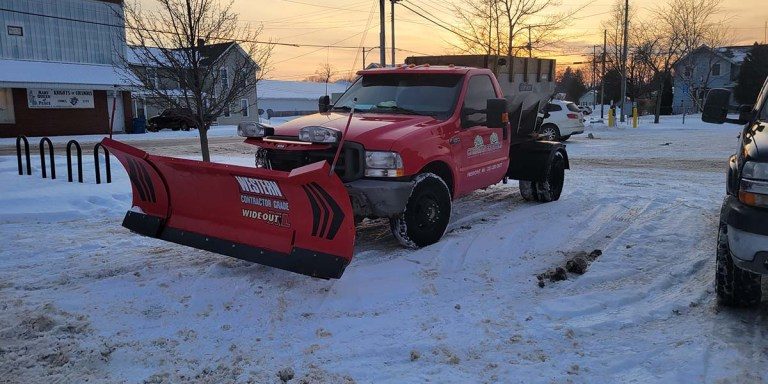
What Does Snow Removal Cost in West Michigan?
Residential snow removal in West Michigan usually costs about $50 to $100 per visit, while seasonal driveway contracts often fall between $350 and $650. Commercial snow removal may start around $50 to $200 per push and climb from there based on the property, salting, snow trigger, and how quickly the site needs to be cleared.
Recent Articles
How to Choose Between Stump Grinding vs. Stump Removal
Stump grinding is usually the best choice for lawns, garden beds, and many landscaping projects. It’s generally faster, less expensive, and less disruptive than full removal. If you’re building a foundation, installing a structure, or planting another tree in the same location, you may need to remove more of the stump and its root system.
How Much Does Stump Removal Cost?
Plan on roughly $100 to $400 to grind one stump, with large hardwood stumps sometimes costing $450 or more. Grinding multiple stumps in one visit usually lowers the price per stump. These are budgeting estimates based on published pricing guides, not Christian Brothers’ quoted rates. Your final cost depends on your property and the work you need done.
What Does Snow Removal Cost in West Michigan?
Residential snow removal in West Michigan usually costs about $50 to $100 per visit, while seasonal driveway contracts often fall between $350 and $650. Commercial snow removal may start around $50 to $200 per push and climb from there based on the property, salting, snow trigger, and how quickly the site needs to be cleared.