
The grass replacement option that’s best for your property depends on your priorities. Where hydroseeding is typically more affordable and customizable than sod, sod provides instant results.
Compare the two directly to see which option may be best for your West Michigan property.
The grass replacement option that’s best for your property depends on your priorities. Where hydroseeding is typically more affordable and customizable than sod, sod provides instant results.
Compare the two directly to see which option may be best for your West Michigan property.
Quick Comparison: Hydroseeding vs. Sod
| Feature | Hydroseeding | Sod |
| Cost | Lower ($0.08–$0.20/sq. ft.) | Higher ($0.30–$0.85/sq. ft.) |
| Time to Results | 3–6 weeks to establish | Instant green coverage |
| Customization | High — seed mix matched to your soil | Limited — pre-grown varieties |
| Erosion Control | Excellent on slopes | Good but less effective on slopes |
| Labor | Applied by spray — minimal disruption | Heavy rolls require manual labor |
| Root Strength | Deep roots develop naturally in place | Roots must knit into existing soil |
Why Choose Hydroseeding?
For many property owners, hydroseeding can be the best option:
- Cost-effective: Hydroseeding covers large areas of your property for pennies compared to sod.
- Custom mixes: Professional landscapers can help you find a seed mix that matches your property’s soil type, usage level, and sun exposure.
- Strong root development: You don’t have to wonder if the seed will integrate with the soil, because it’ll start growing from day one.
- Best for slopes: The tackifier in most hydroseeding mixes helps the soil hold together on hillsides and slopes.
When Sod Might Be Best
On the other hand, sod can provide:
- Instant lawn: You’ll get immediate green coverage without having to wait for germination.
- Rapid erosion prevention: Having an immediate solid surface keeps soil from washing away.
- Easy solutions: Never worry about your grass growing in time when you’re trying to set up for an event or a quick property sale.
Factors to Consider Before Deciding
- Budget: Hydroseeding costs a fraction of the price that sod would cost for the same number of square feet.
- Timeline: Once your crew finishes fixing the edges, sod has instant results. On the other hand, hydroseeding requires a few weeks to grow.
- Site conditions: Erosion-prone properties and those set on hillsides or slopes do better with hydroseeding.
- Maintenance commitment: Hydroseeding requires a consistent watering schedule in the first few weeks. Sod also needs water but is more forgiving overall.
Can I Use Both Hydroseeding and Sod?
Absolutely. Some homeowners prefer to sod high-visibility areas like front yards or areas near walkways for faster results and hydroseed larger, less visible sections for results that last.
More Frequently Asked Questions About Sod & Hydroseeding
Which lasts longer?
Proper care makes all the difference. When you’re watering and fertilizing them, both can last indefinitely. However, hydroseeded lawns can establish deeper root systems more easily because the grass grows directly in your property’s soil.
Which option is best for erosion control?
Hydroseeding has tackifiers and integrated mulch layers that make it better for loose soil, slopes, and hillsides.
How soon can I start using my lawn?
Both require time and space to establish their roots before you can start using them. Sod can usually handle light foot traffic within 2–3 weeks, while hydroseeded areas of your lawn typically need 6–8 weeks before heavy use.
Recent Articles

How to Rejuvenate Your Lawn This Spring
Learn how to rejuvenate your lawn after a West Michigan winter with step-by-step tips on aeration, overseeding, fertilizing, and more.

When Does Spring Cleanup Start?
Spring cleanup starts when the ground has thawed, the lawn is firm, and temperatures are consistently warming. For most cold-weather regions, that means sometime between late March and early May.
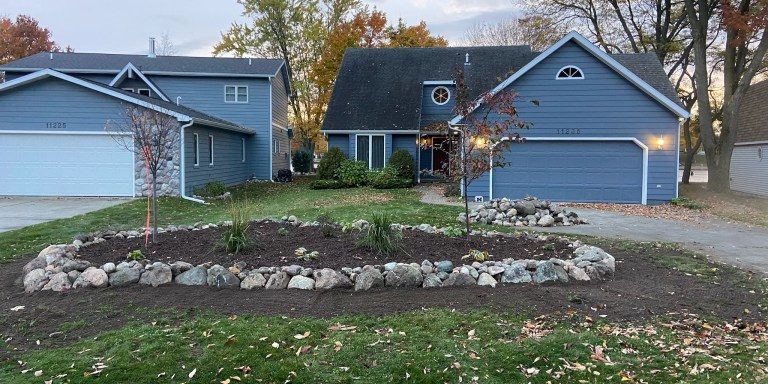
How Much Does Spring Cleanup Cost?
Most homeowners spend $200 to $800 on spring cleanup, depending on property size, debris level, and what services are included. Larger or heavily wooded properties can exceed $1,000.
Recent Articles
How to Rejuvenate Your Lawn This Spring
Learn how to rejuvenate your lawn after a West Michigan winter with step-by-step tips on aeration, overseeding, fertilizing, and more.
When Does Spring Cleanup Start?
Spring cleanup starts when the ground has thawed, the lawn is firm, and temperatures are consistently warming. For most cold-weather regions, that means sometime between late March and early May.
How Much Does Spring Cleanup Cost?
Most homeowners spend $200 to $800 on spring cleanup, depending on property size, debris level, and what services are included. Larger or heavily wooded properties can exceed $1,000.