
Can You Over-Fertilize Your Lawn?
In short, yes. A little bit of fertilizer can be a great thing. However, over-fertilizing your lawn can harm your grass, soil, and the environment in and around your property. It can also cause fertilizer burn and other nutrient imbalances.
Here are some additional reasons why more isn’t always better.
Why Over-Fertilization Happens (and Why It Matters)
Too much fertilizer can reverse the osmotic process that happens within the roots of your grass and bring moisture out rather than draw it in. This can have the exact opposite effect of what you’re looking for when you fertilize your lawn: Brown, yellow, or dead grass that has been overfed beyond repair.
Overfeeding
Your grass might not be able to recover by itself if you’ve given it too much fertilizer. Oftentimes, this requires a more prescriptive treatment from a professional landscaper who is familiar with the pH balance of your soil.
Environmental Impacts
Even more, the consequences of over-fertilizing don’t stop at the edge of your property line. If too much of it is in a given place, fertilizer can seep into the groundwater or leak into creeks, streams, rivers, and lakes of any size.
In turn, this can cause algae blooms that suffocate fish and kill aquatic plants. On land, it can also potentially invite more pests like grubs or mosquitoes into your yard if not handled properly.
4 Common Signs You’ve Over-Fertilized
These are the most telltale warning signs to watch in your lawn:
- Yellow or brown leaf tips: These might look like scorch marks on your lawn from a distance.
- Patchy growth: If your roots are struggling to take on water, these bald patches are the result you’ll see.
- Residual granules and crusting: Much like someone who has taken too much food at a buffet and can’t finish their plate, this shows that the grass isn’t able to absorb all of the fertilizer you’ve been giving it.
- Dark or brittle roots: This is often a sign of long-term damage that requires a more prescriptive treatment process.
Over-Fertilization Happens More Often Than You Think
Many uninformed property owners end up over-fertilizing their lawns without meaning to. In West Michigan, it’s especially common if you:
- Apply more than twice per season at most
- Skip soil tests
- Use blends that have a high concentration of nitrogen
- Ignore labels on store-bought fertilizers
- Don’t account for the nitrogen found in pet urine, if you have pets
Your lawn has a delicate chemistry that, while largely self-regulated, can become overwhelmed if it receives too much of a given chemical. That’s why it’s important to work with professionals who are familiar with the science behind fostering a lush, green lawn.
How to Bring Your Over-Fertilized Lawn Back to Normal
Chances are, you can save your lawn if you’ve over-fertilized it a few too many times. If you’re worried you’re accidentally killing your grass, these are the steps we recommend taking:
- Stop fertilizing your lawn: Otherwise, any other treatments may not be effective.
- Rinse the lawn thoroughly: This should be a familiar option for anyone in Michigan who has ever had to deal with a salt truck accidentally hitting the edge of their lawn in the winter.
- Rake or sweep the grass: Taking away any visible fertilizer granules from the lawn keeps them from dissolving into it.
- Use aeration: Aerating your lawn allows more natural nutrients to penetrate the lawn.
- Overseed damaged areas: Having a professional landscaping team overseed or hydroseed your lawn can help you get back to normal faster.
- Get professional guidance: Christian Brothers knows lawns. We can help you feed and fertilize your lawn so it can get back to its full potential and look greener than ever.
Frequently Asked Questions (FAQ)
Could I kill my lawn with too much fertilizer?
Absolutely. For lawns, there is absolutely such thing as too much of a good thing.
In severe cases, your lawn may need overseeding to get rid of patches or reseeding throughout the entire plot.
How soon will I know I over-fertilized?
Yellow or burned grass can start to appear in a matter of days, especially if you’re overusing store-bought rapid-release fertilizer blends.
Does it make a difference if I use organic fertilizer?
While organic and slow-release fertilizer products can reduce the risk of over-fertilization, you could still overdo it. That’s why we recommend following a regimented diet for your lawn, regardless of the type of fertilizer you’re using.
Recent Articles
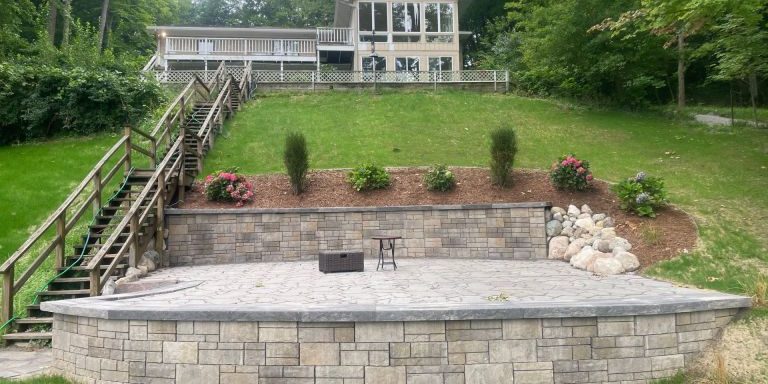
5 Low-Maintenance Summer Landscaping Ideas for West Michigan Homeowners
The secret to a beautiful West Michigan landscape that doesn’t consume your weekends is designing for leisure rather than labor. By swapping difficult turf for functional hardscapes like paver patios and boulder fire pits, and utilizing native perennials that naturally thrive in our unpredictable climate, you drastically reduce mowing, watering, and pruning. Strategic additions like dry creek beds manage heavy downpours, while automated lighting and a thick layer of hardwood mulch keep the yard looking pristine with zero ongoing effort. Ultimately, delegating the remaining upkeep to a comprehensive local team like Christian Brothers Outdoor Services ensures you can spend your short summer actually enjoying your yard, not just working on it.

The Best Native Plants for West Michigan Landscaping
West Michigan’s climate and soils favor plants that evolved here. Native trees like bur oak and flowering dogwood, shrubs like ninebark and winterberry, perennials like black-eyed susan and purple coneflower, and grasses like little bluestem all thrive across Kent, Ottawa, Muskegon, and Newaygo counties with far less water, fertilizer, and upkeep than non-native ornamentals. The tradeoff: most need consistent watering through their first season to establish. After that, they largely take care of themselves.

How to Rejuvenate Your Lawn This Spring
Learn how to rejuvenate your lawn after a West Michigan winter with step-by-step tips on aeration, overseeding, fertilizing, and more.
Recent Articles
5 Low-Maintenance Summer Landscaping Ideas for West Michigan Homeowners
The secret to a beautiful West Michigan landscape that doesn’t consume your weekends is designing for leisure rather than labor. By swapping difficult turf for functional hardscapes like paver patios and boulder fire pits, and utilizing native perennials that naturally thrive in our unpredictable climate, you drastically reduce mowing, watering, and pruning. Strategic additions like dry creek beds manage heavy downpours, while automated lighting and a thick layer of hardwood mulch keep the yard looking pristine with zero ongoing effort. Ultimately, delegating the remaining upkeep to a comprehensive local team like Christian Brothers Outdoor Services ensures you can spend your short summer actually enjoying your yard, not just working on it.
The Best Native Plants for West Michigan Landscaping
West Michigan’s climate and soils favor plants that evolved here. Native trees like bur oak and flowering dogwood, shrubs like ninebark and winterberry, perennials like black-eyed susan and purple coneflower, and grasses like little bluestem all thrive across Kent, Ottawa, Muskegon, and Newaygo counties with far less water, fertilizer, and upkeep than non-native ornamentals. The tradeoff: most need consistent watering through their first season to establish. After that, they largely take care of themselves.
How to Rejuvenate Your Lawn This Spring
Learn how to rejuvenate your lawn after a West Michigan winter with step-by-step tips on aeration, overseeding, fertilizing, and more.