
Summer in West Michigan is beautiful, but we all know it goes by fast. Between weekends at the lakeshore, neighborhood cookouts, and trying to soak up the sun, your time is precious. For homeowners across Kent, Muskegon, Ottawa, and Newaygo counties, the ultimate goal is a gorgeous, functional outdoor space that doesn’t turn into a second job.
If you’re spending more time maintaining your landscape than actually enjoying it, it might be time for a redesign. Here are five high-impact, design-focused landscaping ideas that look incredible and practically take care of themselves.
1. The “Spillover” Paver Patio
If the goal is reducing yard work, expanding your hardscape is the ultimate solution. A well-planned patio looks just as pristine in late August as it does in early June, regardless of rainfall.
Go beyond the standard, builder-grade concrete slab. Consider a textured paver patio that features “spillover” zones—perhaps a main dining area that flows naturally into a smaller, distinct reading nook or a built-in outdoor grilling station.
- Why it’s low maintenance: Replacing a difficult, weed-prone section of your lawn with a stone patio means less mowing, less watering, and less seasonal upkeep. Plus, quality pavers are built to withstand harsh Michigan winters, making them a lasting investment.
- Where it works best: Sloped yards in Grandville or Grand Rapids that are difficult to mow can be beautifully leveled out with retaining walls that double as built-in seating for your new patio.
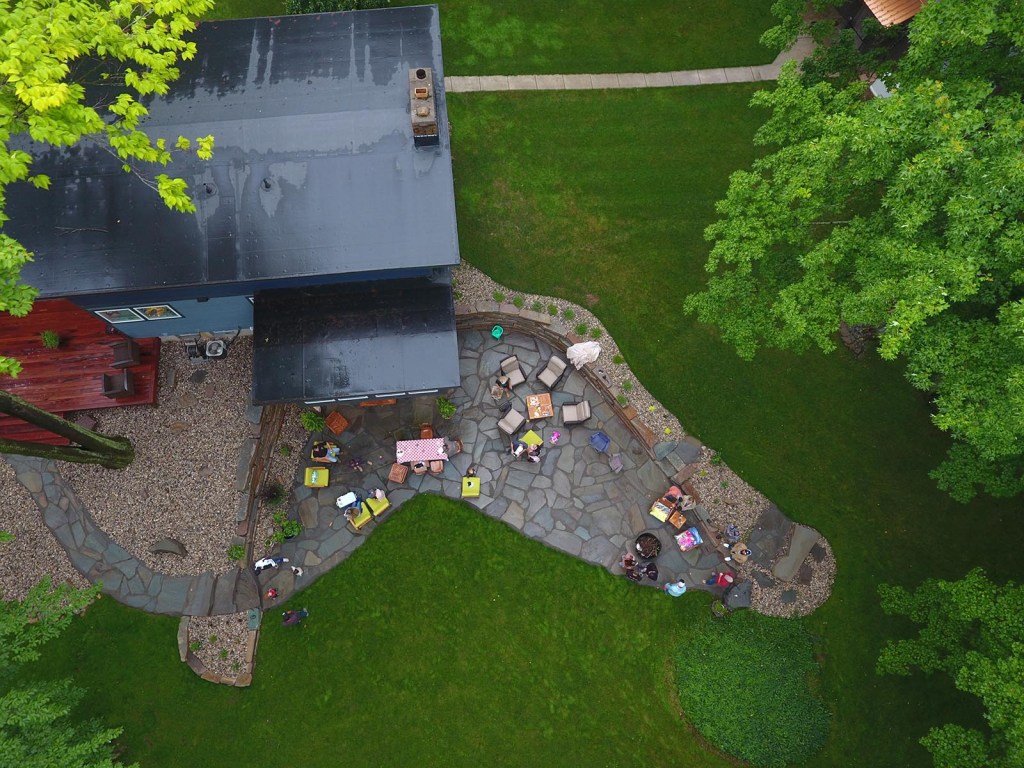
Landscape by Christian Brothers
2. The “No-Mow” Boulder Fire Pit Lounge
Summer nights in Michigan are legendary, but the evenings can still carry a cool breeze. Instead of scorching your turf with a portable fire pit that has to be dragged in and out of the garage, design a dedicated, permanent fire feature.
Carve out a corner of the yard, lay down a heavy weed barrier, and use decorative pea gravel or crushed granite as the base. Surround a natural stone fire pit with heavy, rustic seating boulders and comfortable Adirondack chairs.
- Why it’s low maintenance: This instantly reclaims a chunk of your yard that no longer needs to be watered or fertilized. It creates a dedicated destination in your backyard with zero weekend upkeep required.
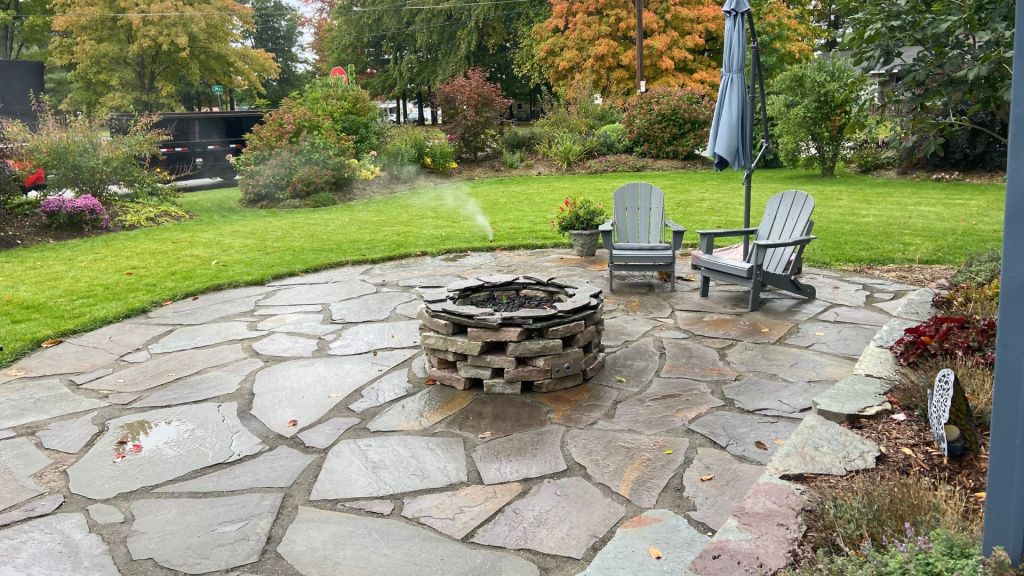
Landscape by Christian Brothers
3. Layered Native Privacy Screens
More homeowners—especially on properties where lots are closer together—want natural screening. However, traditional, perfectly squared-off hedges require constant pruning and babysitting.
Instead, opt for a mixed-texture living screen. Stagger your plantings using a mix of evergreens (like Spruce or Arborvitae) interplanted with tall ornamental grasses and native blooming shrubs like Ninebark.
- Why it’s low maintenance: By staggering the plants and using varied species, your privacy screen grows into a natural woodland border. It doesn’t require the strict, meticulous trimming that a formal hedge demands, and native plants are already adapted to Michigan’s soil and climate.
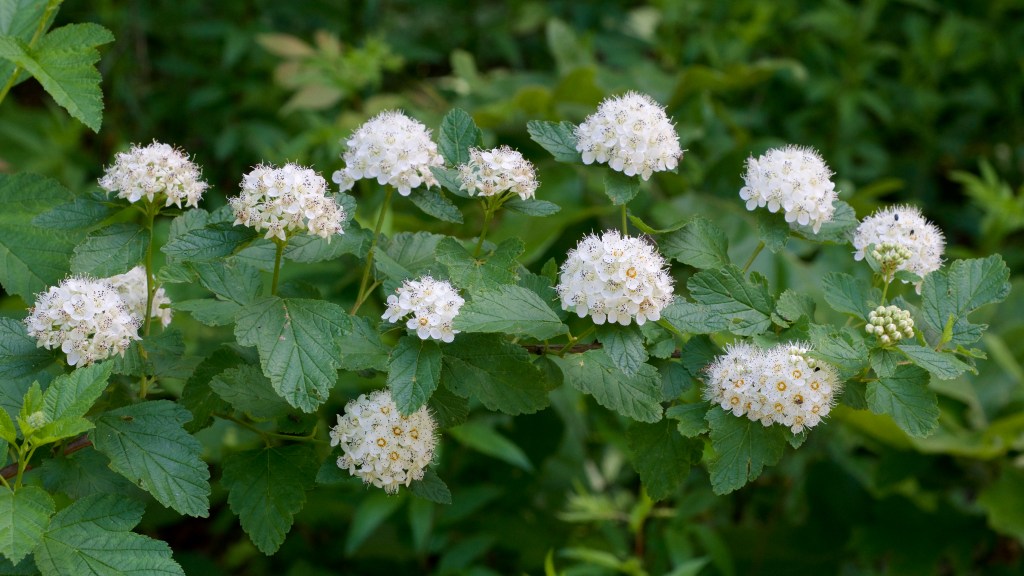
By Eric Hunt – Own work, CC BY-SA 4.0, https://commons.wikimedia.org/w/index.php?curid=80376851
4. The Dry Creek Bed for Drainage and Drama
West Michigan summers can swing wildly from a week of absolute downpours to two weeks of baking heat. A dry creek bed is a gorgeous design feature that actually solves this functional problem.
Create a meandering trench lined with river rock, varying sizes of cobblestone, and larger accent boulders. Soften the edges by planting hardy, drought-tolerant perennials and ornamental grasses along the banks.
- Why it’s low maintenance: During dry spells, it acts as a beautiful, rustic focal point. During a heavy July thunderstorm, it naturally channels water away from your foundation and patios without washing out your mulch beds.

5. Resort-Style Landscape Lighting
Lighting is the easiest way to make a landscape look custom-designed, and it caters to the summer season by extending the hours you can actually use your yard.
Highlight the architectural features of your home with warm uplighting. Add subtle, low-voltage path lights along stone walkways, and use downlighting from mature trees (a technique called “moonlighting”) to cast gentle shadows over your new patio.
- Why it’s low maintenance: Once installed with a smart timer or photocell, landscape lighting is completely hands-off. It makes your existing property look twice as good at night without planting a single new flower.

Landscape by Christian Brothers
The Low-Maintenance Plant Swap Guide
Even with great hardscaping, you still want greenery. Choosing the right plants means they stay consistent week to week without extra intervention.
| Instead of High-Maintenance… | Plant This Instead… | Why It Works in West Michigan |
| Fussy Annuals | Coneflowers & Black-eyed Susans | Native, drought-tolerant, and come back every year while attracting pollinators. |
| Delicate Shrubbery | Hydrangeas | Provide massive, long-lasting color right through the peak heat of summer. |
| Exotic Groundcover | Hostas | Perfect for shaded areas under mature trees where standard grass refuses to grow. |
| Formal Topiaries | Ornamental Grasses | Hold their beautiful, textured shape through wind, heat, and heavy summer rain. |
Pro-tip: Don’t skip the mulch. A fresh two- to three-inch layer of hardwood mulch at the start of the season holds moisture in the soil during dry stretches, protects roots from temperature swings, and dramatically slows weed growth.
Ready to Spend Less Time Working on Your Yard?
For busy professionals and active families who are already stretched thin during the week, the question isn’t whether the yard needs attention but how much of it actually has to be your problem.
Christian Brothers Outdoor Services works with homeowners across West Michigan. We handle everything from landscape design and hardscape construction to monthly bed upkeep and irrigation management.
Schedule a visit, walk your property with our team, and let’s build a plan to give you your summer weekends back.
Frequently Asked Questions
What is the best way to reduce yard maintenance in the summer?
Focus on reducing large, difficult turf areas by replacing them with functional hardscaping like paver patios or fire pit lounges. For the remaining green space, utilize native, heat-tolerant plants that don’t require constant watering, and use a thick layer of mulch to suppress weeds.
How do I keep my yard from drying out during hot stretches?
Mulch is your best defense for retaining moisture in your beds between waterings. For the lawn, a properly set, automated irrigation system takes the guesswork out of timing and prevents you from having to drag a hose around the yard every evening.
Are native plants really better for Michigan landscapes?
Yes. Native plants are naturally adapted to our specific climate swings and soil types. Once established, they require significantly less watering, suffer from fewer pest problems, and survive harsh winters much better than non-native species.
Do I need to hire separate companies for lawncare, bed maintenance, and hardscaping?
No. Working with a comprehensive company that handles multiple services—from patio construction to weed control and irrigation—cuts down on the scheduling and communication overhead. It ensures a cohesive, consistent result across your entire property.
Recent Articles

How to Choose Between Stump Grinding vs. Stump Removal
Stump grinding is usually the best choice for lawns, garden beds, and many landscaping projects. It’s generally faster, less expensive, and less disruptive than full removal. If you’re building a foundation, installing a structure, or planting another tree in the same location, you may need to remove more of the stump and its root system.

How Much Does Stump Removal Cost?
Plan on roughly $100 to $400 to grind one stump, with large hardwood stumps sometimes costing $450 or more. Grinding multiple stumps in one visit usually lowers the price per stump. These are budgeting estimates based on published pricing guides, not Christian Brothers’ quoted rates. Your final cost depends on your property and the work you need done.
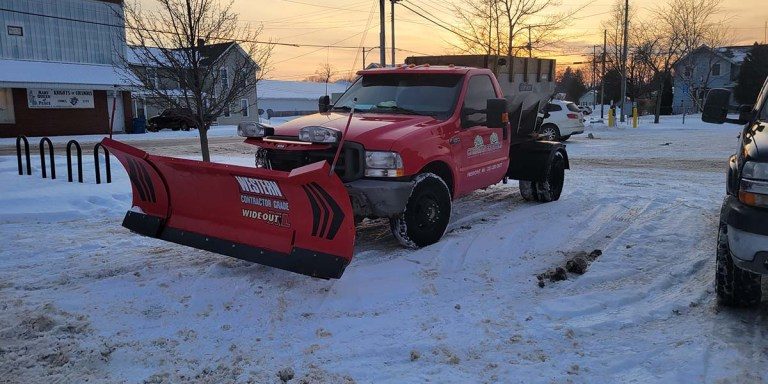
What Does Snow Removal Cost in West Michigan?
Residential snow removal in West Michigan usually costs about $50 to $100 per visit, while seasonal driveway contracts often fall between $350 and $650. Commercial snow removal may start around $50 to $200 per push and climb from there based on the property, salting, snow trigger, and how quickly the site needs to be cleared.
Recent Articles
How to Choose Between Stump Grinding vs. Stump Removal
Stump grinding is usually the best choice for lawns, garden beds, and many landscaping projects. It’s generally faster, less expensive, and less disruptive than full removal. If you’re building a foundation, installing a structure, or planting another tree in the same location, you may need to remove more of the stump and its root system.
How Much Does Stump Removal Cost?
Plan on roughly $100 to $400 to grind one stump, with large hardwood stumps sometimes costing $450 or more. Grinding multiple stumps in one visit usually lowers the price per stump. These are budgeting estimates based on published pricing guides, not Christian Brothers’ quoted rates. Your final cost depends on your property and the work you need done.
What Does Snow Removal Cost in West Michigan?
Residential snow removal in West Michigan usually costs about $50 to $100 per visit, while seasonal driveway contracts often fall between $350 and $650. Commercial snow removal may start around $50 to $200 per push and climb from there based on the property, salting, snow trigger, and how quickly the site needs to be cleared.