
Native plants have been growing in this part of Michigan for thousands of years. They’ve developed alongside local insects, birds, and soil conditions, which means they’re perfect for exactly the environment you’re working with. Once established, most require far less watering, fertilizing, and intervention than non-native ornamentals.
Choosing plants that are native to this region supports local wildlife and is a practical approach to getting more out of your landscape with less work. Below is a rundown of some of the best options so you can start thinking about what fits your property.
Native Trees
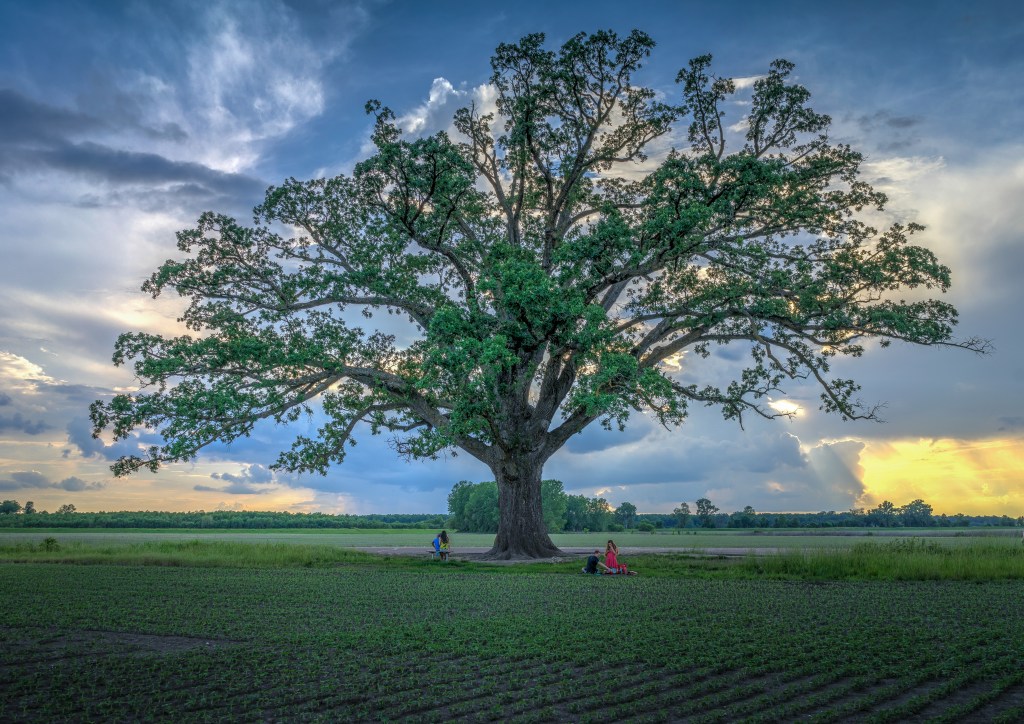
Bur Oak
Quercus macrocarpa
Height: up to 100 ft · Sun: full sun · Soil: adaptable, drought tolerant
Bur oak is one of the toughest native trees you can put in a West Michigan yard. It handles drought well once established, tolerates a range of soil types, and can live for centuries. In the fall, its deeply lobed leaves turn golden yellow, and it produces large acorns that draw in wildlife. Mature trees reach up to 100 feet and often spread just as wide, so bur oak is a long-term investment in shade and habitat.
By Heath Cajandig – https://www.flickr.com/photos/96228372@N06/26795406264/, CC BY 2.0, https://commons.wikimedia.org/w/index.php?curid=96920363
Flowering Dogwood
Cornus florida
Height: 20–40 ft · Sun: partial to full shade · Soil: rich, well-drained, acidic
White or pink flowers arrive in spring, red berries follow in fall and attract birds, and the foliage turns a deep red before dropping. It prefers rich, well-drained, acidic soil and some shade, making it a strong pick for spots under a taller tree canopy or along the north side of a building.

By Eric Hunt – Own work, CC BY-SA 4.0, https://commons.wikimedia.org/w/index.php?curid=102564221
Tulip Tree
Liriodendron tulipifera
Height: up to 120 ft · Sun: full sun · Soil: moist, acidic
One of the more dramatic native trees in this part of Michigan, the tulip tree grows fast and tall, up to 120 feet in the right conditions. The tulip-shaped flowers bloom in late spring, and the unique four-lobed leaves turn brilliant yellow in fall. It does best in moist, acidic soil with full sun. However, it’s susceptible to ice and wind damage, so plant it somewhere it will be relatively protected.

By Dcrjsr – Own work, CC BY 3.0, https://commons.wikimedia.org/w/index.php?curid=19112108
Native Shrubs
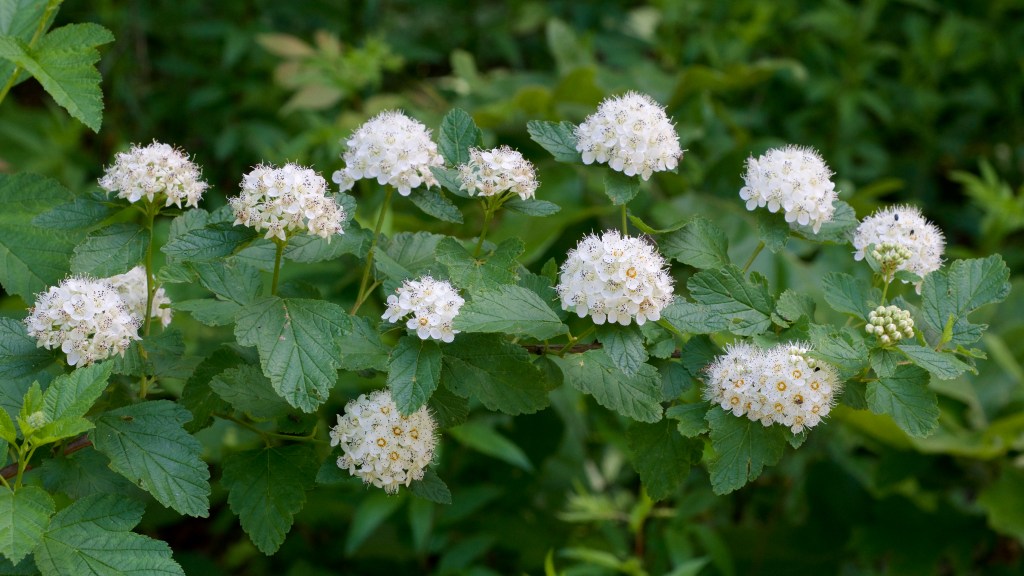
Common Ninebark
Physocarpus opulifolius
Height: 6–9 ft · Sun: sun or shade · Soil: any soil type
Ninebark grows in sun or shade, handles varying soil conditions, and reaches six to nine feet with minimal fuss. The peeling bark adds texture in winter, pink-white flowers show up in May and June, and fall color ranges from red to orange. Birds are drawn to the rose-red fruit in late summer. Several cultivars are available if you want a more compact version.
By Eric Hunt – Own work, CC BY-SA 4.0, https://commons.wikimedia.org/w/index.php?curid=80376851
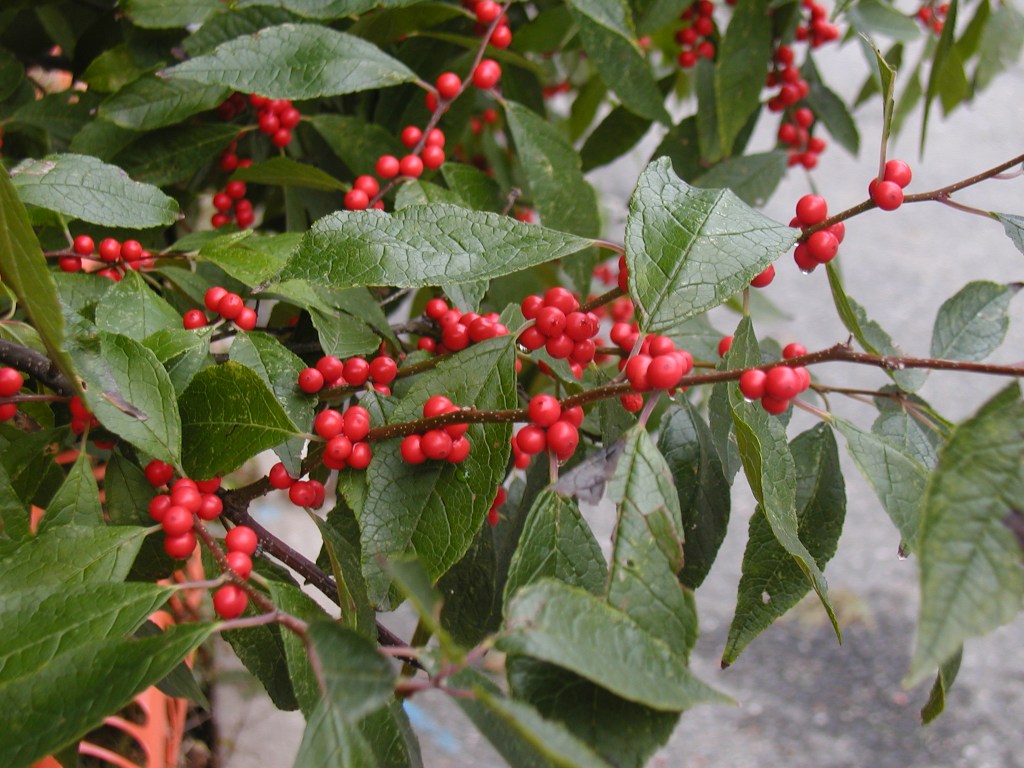
Winterberry (Michigan Holly)
Ilex verticillata
Height: 6–10 ft · Sun: full sun to partial shade · Soil: wet, acidic
Known locally as Michigan holly, winterberry is one of the most visually striking native shrubs during the colder months. Bright red berries persist well into winter and serve as a food source for birds after most other plants have gone bare. You’ll need both a male and a female plant to produce berries. Compact cultivars like ‘Red Sprite’ keep it around five feet if space is limited.
By User:SB_Johnny – Own work, CC BY-SA 3.0, https://commons.wikimedia.org/w/index.php?curid=1409632
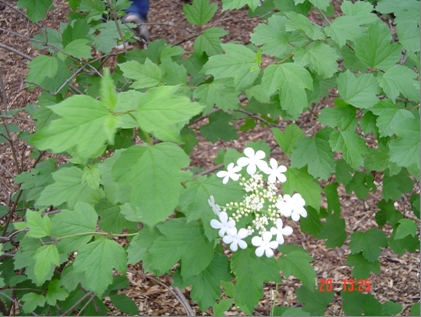
American Highbush Cranberry
Viburnum trilobum
Height: 8–12 ft · Sun: full sun to partial shade · Soil: wet or dry, adaptable
This native viburnum produces white flowers in spring and bright red berries that carry through winter to attract birds and add color after the season has faded. It adapts well to wet and dry soils alike and can handle both sun and partial shade. At full size, it reaches eight to twelve feet, so it’s a solid backdrop plant or informal screen.
By Edward Tremel at the English-language Wikipedia, CC BY-SA 3.0, https://commons.wikimedia.org/w/index.php?curid=18605091
New Jersey Tea
Ceanothus americanus
Height: ~3 ft · Sun: full sun to light shade · Soil: sandy, rocky, well-drained
Smaller than most shrubs on this list at around three feet, New Jersey tea is a good fit for foundation plantings and mixed borders, especially in sandy or rocky soils with good drainage. It blooms with fragrant white flowers in mid-summer and attracts hummingbirds and butterflies with minimal upkeep.

By unknown author, USFWS – United States Fish and Wildlife Service, Sherburne National Wildlife Refuge: Ceanothus americanus L., Public Domain, https://commons.wikimedia.org/w/index.php?curid=666534
Buttonbush
Cephalanthus occidentalis
Height: 5–6 ft · Sun: full sun · Soil: moist to wet
If your property has wet or consistently moist areas, buttonbush is one of the better native shrubs for that challenge. It grows five to six feet tall with glossy foliage and spherical white flower clusters in mid-July that attract butterflies. It does well in full sun and tolerates higher pH soils, but won’t thrive in dry ground. Good for rain garden edges, low spots, or areas near water.

By The Cosmonaut – Own workThis image was created with darktable., CC BY-SA 4.0, https://commons.wikimedia.org/w/index.php?curid=92468888
Native Perennials
Black-Eyed Susan
Rudbeckia hirta
Height: 1–2 ft · Sun: full sun · Soil: dry to medium, well-drained · Bloom: Jun–Sep
Few native perennials are as easy or as rewarding as black-eyed Susan. Bright yellow flowers with a dark center bloom from early summer through September, and the plants themselves are drought-tolerant once established. They grow one to two feet tall, work well as a border or edging plant in groups, and support a wide range of pollinators. Just keep in mind that they are toxic when ingested by cats.

By Krzysztof Ziarnek, Kenraiz – Own work, CC BY-SA 4.0, https://commons.wikimedia.org/w/index.php?curid=104677579
Purple Coneflower
Echinacea purpurea
Height: 2–4 ft · Sun: full sun · Soil: slightly moist · Bloom: Jul–Sep
Purple coneflower has become one of the more popular native perennials for good reason. It supports a high number of pollinators with its nectar and pollen, birds flock to the seed-laden flower heads in fall, and even hummingbirds stop by the purple blooms for a quick meal. It can often be found at local nurseries.
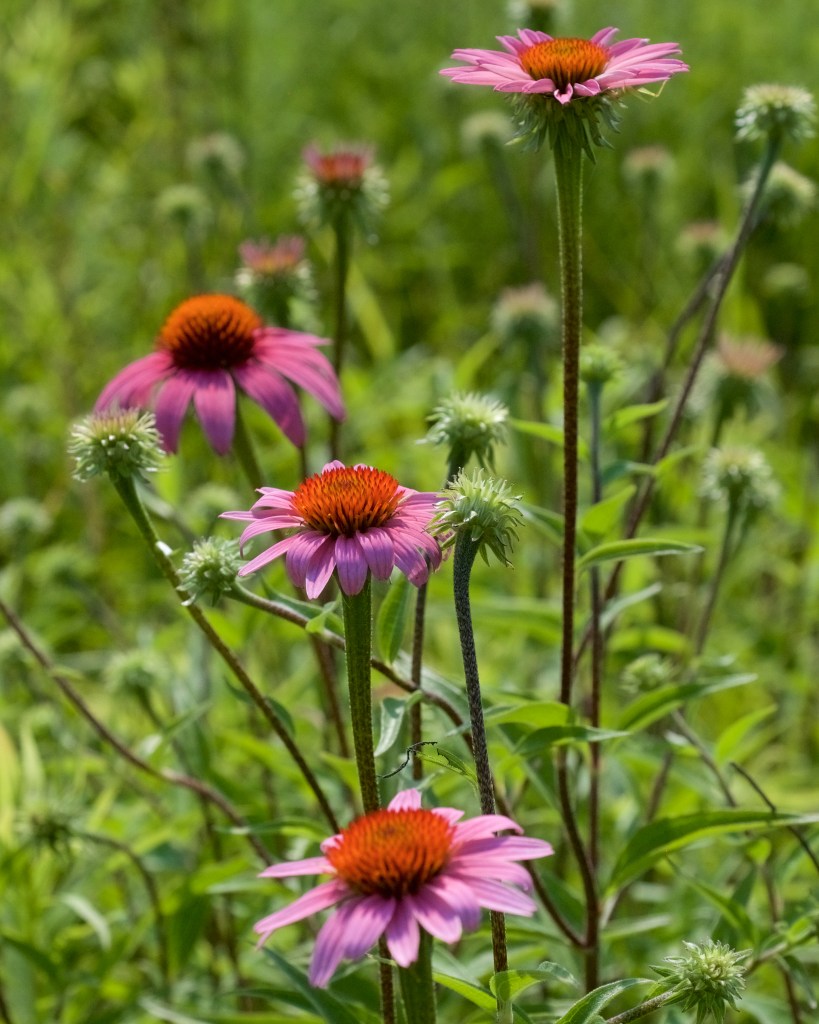
By Eric Hunt – Own work, CC BY-SA 4.0, https://commons.wikimedia.org/w/index.php?curid=74955301
Bee Balm (Wild Bergamot)
Monarda fistulosa
Height: 2–4 ft · Sun: full sun · Soil: most types except very wet · Bloom: Jul–Aug
Bee balm is highly adaptable and will handle most soil types as long as it gets enough sun. Its flowers attract butterflies, bees, and hummingbirds during its mid-summer bloom. It spreads over time but is easy to divide to keep it in check.
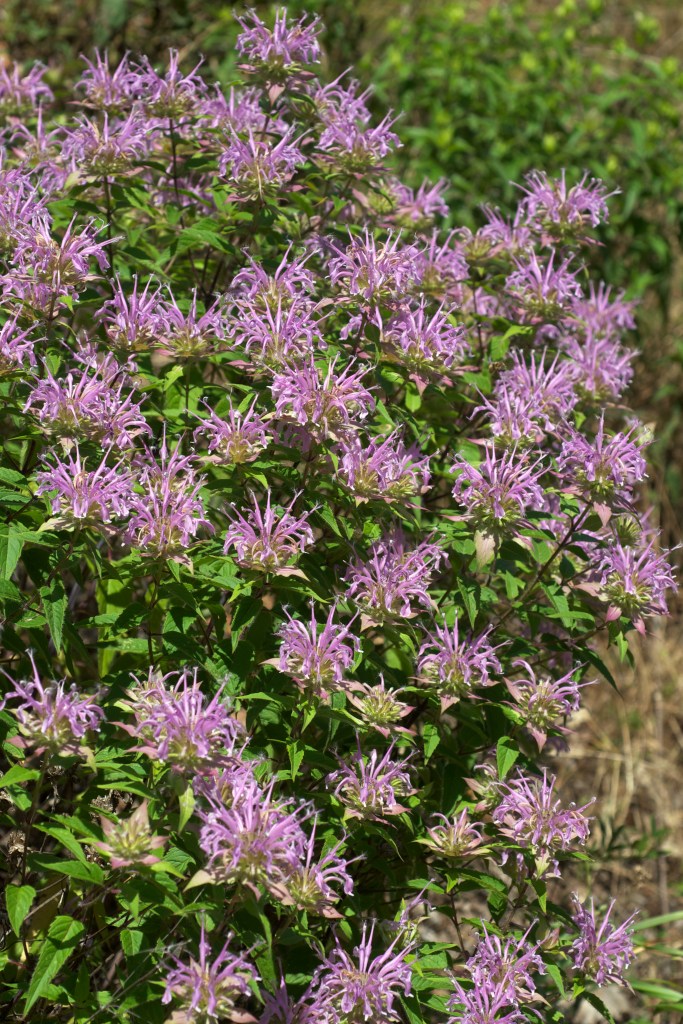
By Eric Hunt – Own work, CC BY-SA 4.0, https://commons.wikimedia.org/w/index.php?curid=91403406
New England Aster
Symphyotrichum novae-angliae
Height: up to 6 ft · Sun: full sun to light shade · Soil: moist · Bloom: Aug–Oct
New England aster fills the late-season gap when most perennials have finished blooming. The purple flowers run from summer into fall, and monarch butterflies use them as a fueling stop before their migration south. It can reach up to six feet, so if height becomes an issue, stems can be cut back by mid-July to keep it more compact.

By The Cosmonaut – Own work, CC BY-SA 2.5 ca, https://commons.wikimedia.org/w/index.php?curid=98381010
Cardinal Flower
Lobelia cardinalis
Height: 2–4 ft · Sun: full sun to partial shade · Soil: moist to wet · Bloom: Jun–Oct
Cardinal flower produces deep scarlet-red blooms on tall stems from late spring through fall. It’s a wetland plant by nature, so it works well in yards with damp soil, near ponds, or in low spots that stay moist. However, it’s toxic to dogs, so keep that in mind for properties with pets.
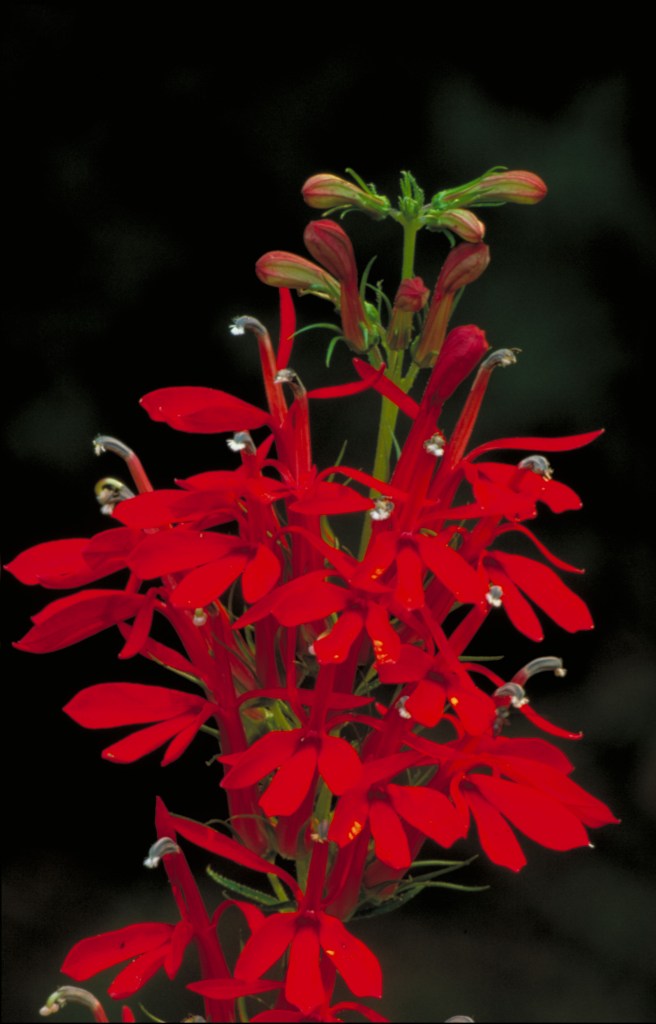
By Barnes, Dr. Thomas G. – http://www.fws.gov/digitalmedia/FullRes/natdiglib/IMG0052.jpg, Public Domain, https://commons.wikimedia.org/w/index.php?curid=8639099

Butterfly Weed
Asclepias tuberosa
Height: 1–2 ft · Sun: full sun · Soil: dry, sandy · Bloom: Jun–Aug
Butterfly weed produces orange clusters of flowers and serves as a host plant for monarch caterpillars, so it’s one of the more ecologically meaningful perennials you can add to a West Michigan landscape. It handles sandy, dry ground very well.
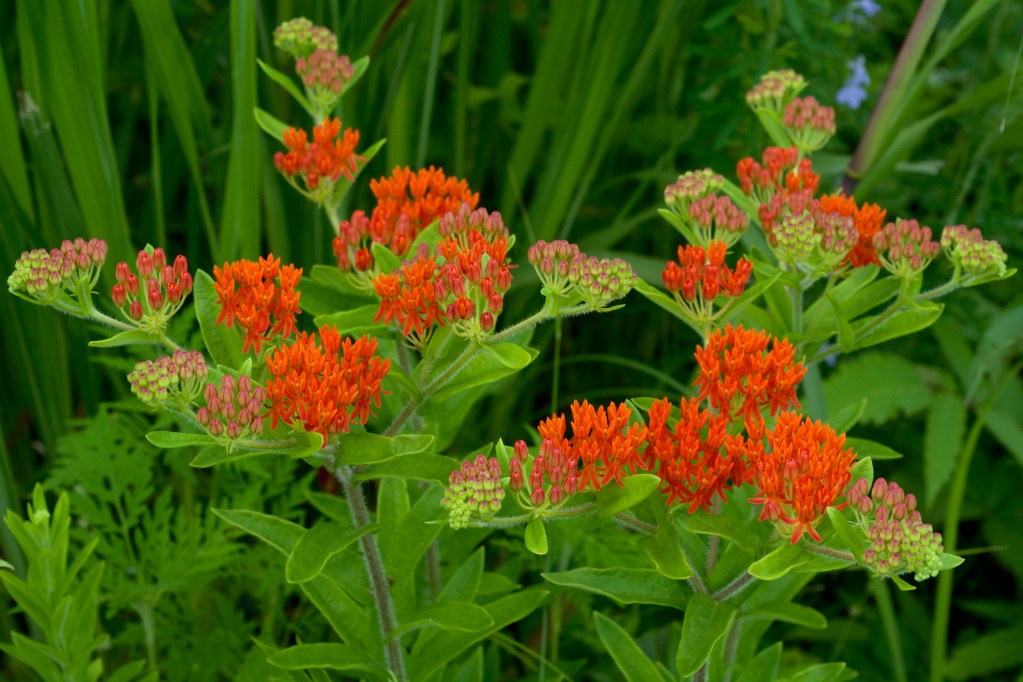
By Eric Hunt – Own work, CC BY-SA 4.0, https://commons.wikimedia.org/w/index.php?curid=84315648
Native Grasses and Sedges
Little Bluestem
Schizachyrium scoparium
Height: 2–4 ft · Sun: full sun · Soil: dry, sandy · Color: copper-orange in fall/winter
Little bluestem is one of the more widely used native grasses in West Michigan landscaping. It’s drought-tolerant, handles sandy soils well, and provides excellent winter interest with its copper-orange color after frost. It works well in borders, meadow-style plantings, or on slopes where erosion is a concern.

Public Domain, https://commons.wikimedia.org/w/index.php?curid=807822
Switchgrass
Panicum virgatum
Height: up to 10 ft · Sun: full sun to part shade · Soil: dry to moist
Switchgrass can reach up to ten feet with feathery seed panicles that emerge in late summer and carry golden yellow color into fall and winter. It tolerates a wide range of conditions from dry to moist soil. It’s a good candidate for natural screens, sunny borders, or meadow gardens, and it provides habitat for birds throughout the colder months.
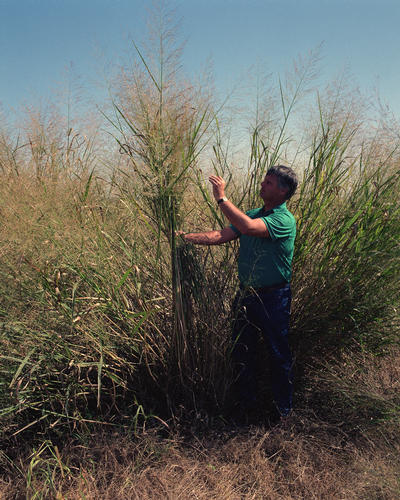
By Warren Gretz, DOE/NREL – National Renewable Energy Laboratory (NREL): PIX number 03246 as low resolution JPEG via IndexPIXNREL is the principal research laboratory for the U.S. Department of Energy’s (DOE) Office of Energy Efficiency and Renewable Energy (EERE), Public Domain, https://commons.wikimedia.org/w/index.php?curid=198755
Purple Lovegrass
Eragrostis spectabilis
Height: 8–18 in · Sun: full sun · Soil: dry, sandy · Bloom: Aug–Oct
A shorter option at eight to eighteen inches, purple lovegrass does well in sandy, well-drained soil and makes a good ground cover for sunny spots that are tough to establish. It’s drought-tolerant, deer-resistant, and blooms from August to October with a cloud-like purple-pink color.

By Photo by David J. Stang – source: David Stang. First published at ZipcodeZoo.com, CC BY-SA 4.0, https://commons.wikimedia.org/w/index.php?curid=61035801
A Few Things to Keep in Mind Before You Plant
Soil Types
West Michigan soils vary quite a bit from one county to the next. Sandy, fast-draining ground is common near the Lake Michigan shoreline in Muskegon County, while Kent County properties can be heavier and hold more moisture. Before committing to any plant, it’s worth knowing what you’re working with. MSU Extension recommends getting a soil test done before planting and repeating it every three years, and local nurseries can help you match plants to your results.
Growth Speed
Native plants tend to establish slowly in their first season while they’re building out root systems. Watering every other day through that first season is standard practice. By year two, most well-chosen natives should be handling conditions on their own.
Local Sourcing
It’s also worth sourcing plants grown from Michigan stock when you can. A coneflower grown from seed in Florida may share the same name as a Michigan-grown plant, but it may not be as well-adapted to the winters and soil conditions here. Local nurseries and native plant sales through organizations like Wild Ones are good places to find regionally sourced stock.
Let Christian Brothers Help You Get It Right
If you’re starting from scratch with a new landscape installation or refreshing existing beds, getting the right plants in the right spots makes a difference in how your property looks and how much maintenance it needs over time.
Christian Brothers Outdoor Services works with homeowners and property managers across Kent, Ottawa, Muskegon, and Newaygo counties, and our team has hands-on experience with the soil and climate conditions throughout West Michigan. From landscape construction and installation to ongoing bed maintenance (which includes monthly visits with hand-pulling of weeds every time), we handle the work so you don’t have to. Contact us today to schedule a free estimate.
Frequently Asked Questions
Are native plants actually low-maintenance?
Once established, yes, but that first season takes effort. Native plants spend their first year putting energy into building deep root systems rather than top growth, which means they can look unimpressive early on and need regular watering to get through that stretch.
Watering every other day through the first growing season is standard practice. After that, most well-sited natives handle Michigan’s rainfall, winters, and dry spells on their own without fertilizer, pesticides, or supplemental watering. You’ll still want to weed around them, especially early on before they’ve filled in, and do some light pruning or cutting back in spring, but the ongoing time and cost are considerably lower than maintaining non-native ornamentals or large turf areas.
What native plants work best in West Michigan’s sandy soil?
Butterfly weed, little bluestem, purple lovegrass, and New Jersey tea all perform well in dry, sandy conditions and don’t need amended soil to thrive. Black-eyed susan and bee balm also handle drier ground well once established. The key is pairing plants to the drainage conditions you actually have, rather than working against them; native plants grown in their preferred soil need far less intervention over time.
Will native plants attract unwanted wildlife or pests to my yard?
Native plants do attract wildlife, but not the kind that causes problems. You’ll see more pollinators, songbirds, and butterflies, which most people consider a benefit. As for pests, native plants tend to reduce pest pressure over time because they support populations of beneficial insects that keep problem species in check.
Can I mix native plants with the non-native plants already in my beds?
Yes, and it’s often the most practical way to start. You don’t need to overhaul your entire landscape at once. Adding a few well-chosen natives to existing beds is a reasonable first step, and many of them—purple coneflower, black-eyed susan, and bee balm especially—blend naturally with traditional garden plantings. If you have established invasives like burning bush or common buckthorn, removing those before adding natives will give the new plants a better chance to fill in.
When is the best time to plant native plants in West Michigan?
Spring and fall are both good windows, with spring being the more common choice for most homeowners. Planting in April or May gives plants a full season to establish before winter. Fall planting also works well for many natives, particularly perennials and shrubs, since cooler temperatures and fall rainfall reduce transplant stress.
Do native plants come back every year?
Most of the plants on this list are perennials, meaning they return year after year from the same root system. Trees and shrubs are obviously long-term plantings. The native grasses also come back annually and often look their best in fall and winter when most other plants have gone dormant. A few native perennials are short-lived by nature, meaning they may complete their life cycle in two to three years, but many of those self-seed readily and continue showing up in your beds without any replanting on your part.
Recent Articles
5 Low-Maintenance Summer Landscaping Ideas for West Michigan Homeowners
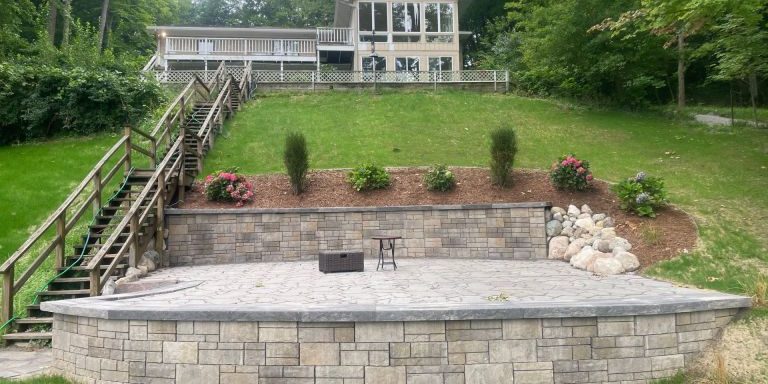
The secret to a beautiful West Michigan landscape that doesn’t consume your weekends is designing for leisure rather than labor. By swapping difficult turf for functional hardscapes like paver patios and boulder fire pits, and utilizing native perennials that naturally thrive in our unpredictable climate, you drastically reduce mowing, watering, and pruning. Strategic additions like dry creek beds manage heavy downpours, while automated lighting and a thick layer of hardwood mulch keep the yard looking pristine with zero ongoing effort. Ultimately, delegating the remaining upkeep to a comprehensive local team like Christian Brothers Outdoor Services ensures you can spend your short summer actually enjoying your yard, not just working on it.

The Best Native Plants for West Michigan Landscaping
West Michigan’s climate and soils favor plants that evolved here. Native trees like bur oak and flowering dogwood, shrubs like ninebark and winterberry, perennials like black-eyed susan and purple coneflower, and grasses like little bluestem all thrive across Kent, Ottawa, Muskegon, and Newaygo counties with far less water, fertilizer, and upkeep than non-native ornamentals. The tradeoff: most need consistent watering through their first season to establish. After that, they largely take care of themselves.

How to Rejuvenate Your Lawn This Spring
Learn how to rejuvenate your lawn after a West Michigan winter with step-by-step tips on aeration, overseeding, fertilizing, and more.
Recent Articles
5 Low-Maintenance Summer Landscaping Ideas for West Michigan Homeowners
The secret to a beautiful West Michigan landscape that doesn’t consume your weekends is designing for leisure rather than labor. By swapping difficult turf for functional hardscapes like paver patios and boulder fire pits, and utilizing native perennials that naturally thrive in our unpredictable climate, you drastically reduce mowing, watering, and pruning. Strategic additions like dry creek beds manage heavy downpours, while automated lighting and a thick layer of hardwood mulch keep the yard looking pristine with zero ongoing effort. Ultimately, delegating the remaining upkeep to a comprehensive local team like Christian Brothers Outdoor Services ensures you can spend your short summer actually enjoying your yard, not just working on it.
The Best Native Plants for West Michigan Landscaping
West Michigan’s climate and soils favor plants that evolved here. Native trees like bur oak and flowering dogwood, shrubs like ninebark and winterberry, perennials like black-eyed susan and purple coneflower, and grasses like little bluestem all thrive across Kent, Ottawa, Muskegon, and Newaygo counties with far less water, fertilizer, and upkeep than non-native ornamentals. The tradeoff: most need consistent watering through their first season to establish. After that, they largely take care of themselves.
How to Rejuvenate Your Lawn This Spring
Learn how to rejuvenate your lawn after a West Michigan winter with step-by-step tips on aeration, overseeding, fertilizing, and more.